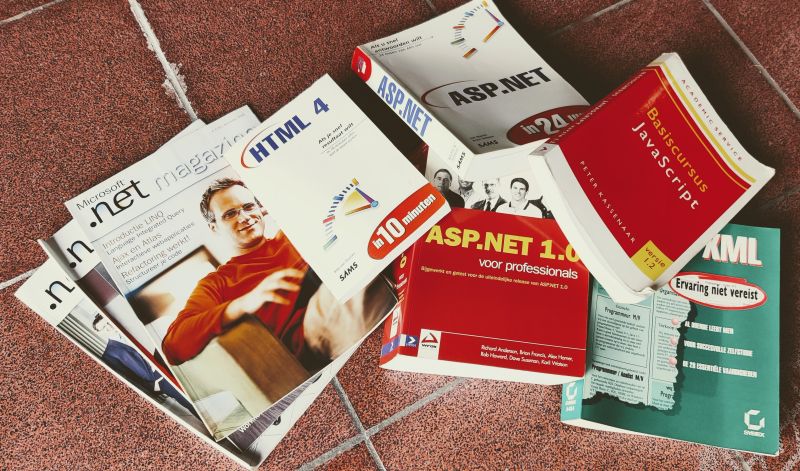
I have been passionate about the world of web development since 1995, so a reflection... 🤔
For me, it started as a teenager in the early days of the commercial internet in Belgium, in the era of screeching modems, with simple personal websites filled with marquee tags and little GIFs. It was a time when websites glittered with blinking text and annoying background music played automatically after a web page loaded. Many websites had a guestbook where visitors could leave their digital footprint, and the number on the visitor counter was a source of pride ...or frustration. Finally, an "under construction" GIF promised that more exciting things were on the way.
As the years went by, my focus shifted towards more complex web applications. I have seen technologies come and go, and with every new wave we were forced to sharpen our skills. We learned new languages and embraced new frameworks. This continuous learning curve was a challenge, but also a source of satisfaction.
Today, however, the web development landscape has changed beyond recognition, with an almost endless list of frameworks, libraries and tools, each offering unique benefits and specialisations. It used to be a point of pride for me to keep up with every new development in HTML, CSS or JavaScript, but the proliferation of options has made it impossible, even for the most dedicated developers, to keep up with everything. Countless frameworks, tools and libraries flood the market and have both enriched and complicated the field. Developers are challenged to continuously choose, learn and adapt, far more than in the past.
My view on this is mixed. On the one hand, I support the innovation and possibilities these new tools and technologies offer, allowing us as a community to build faster, more efficiently and at scale. On the other hand, it puts enormous pressure on individual developers, who are now faced with the impossible task of knowing "everything". It requires a shift in how we approach learning in the tech industry, with the emphasis not so much on going deeply into one thing, but rather on the ability to pick up new things quickly and start working with them as soon as possible.
Fortunately, artificial intelligence is entering the playing field at exactly the right time here too. It supports developers in acquiring new knowledge with tailored answers and programming assistance. The question is not whether A.I. should be used, but how, in order to maintain knowledge and safeguard quality over the long term. The future is unpredictable, but full of potential for those who ride the waves of innovation. 🌊🏄♂️🌊